Why Being Fit Makes You a Better Dad (And Better at Everything)

Get weekly dad fitness wins in your inbox
Join 5,000+ dads getting practical workouts, nutrition tips, and honest fatherhood insights. Free, every week.
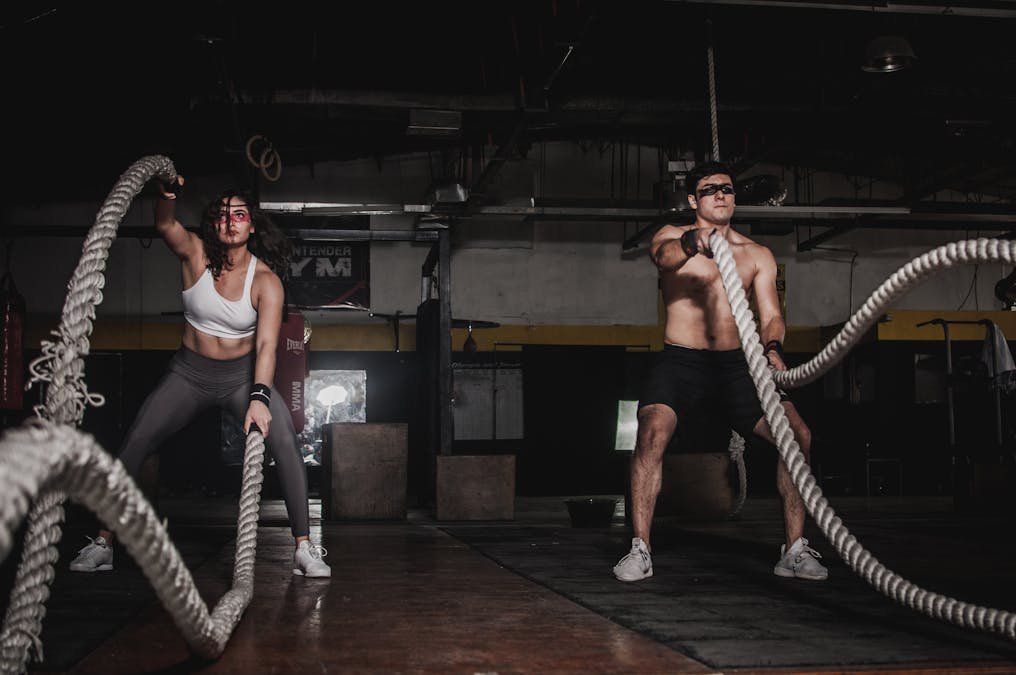
There’s a moment I think a lot of dads have experienced. Your kid — four years old, maybe five — grabs you by the hand and says “chase me, Daddy.” And you want to. You really do. But somewhere between the sofa and the garden, your body has other ideas. Your lungs are already complaining. Your knees have opinions. You manage about thirty seconds before you’re bent double with your hands on your thighs, waving them on while you recover. That was me a few years ago. Not unwell, not ancient — just a bloke in his late thirties who’d spent a decade prioritising everything except his own body. And the realisation that hit me in that moment wasn’t about vanity. It wasn’t about wanting a six-pack. It was simpler and more uncomfortable than that: I wasn’t the dad I wanted to be, and the state of my body had something to do with it.
I’m not here to lecture you. But I do want to make the case — properly, honestly, with both research and real life — that getting fit isn’t a selfish act for dads. It’s one of the most important things you can do for your family.
The Energy to Actually Show Up
You Can’t Pour From an Empty Tank
The “oxygen mask” principle gets trotted out a lot in wellness circles, and I understand why people roll their eyes at it. But strip away the self-care language and there’s a genuinely practical truth underneath it: if you’re running on empty, you’ve got nothing to give. Not to your kids, not to your partner, not to your work.
Regular exercise — even moderate stuff, three sessions a week — has consistently been shown to increase energy levels over time. This isn’t just gym-bro optimism. The NHS confirms that regular physical activity reduces fatigue and improves overall vitality. The mechanism is partly cardiovascular — your heart and lungs become more efficient, so everyday tasks cost less effort — and partly mitochondrial. Your cells literally get better at producing energy.
When I started training consistently, the first thing I noticed wasn’t in the mirror. It was that I stopped needing to lie on the sofa after work before I could face the evening. I had enough left in the tank to be present — to help with homework, to actually play rather than just supervise, to hold a proper conversation with my wife instead of staring at my phone.
Keeping Up Matters More Than You Think
There’s something that happens when a dad can physically keep up with his kids. Not just the practical benefit — though chasing a seven-year-old around a playground without dying is genuinely useful — but the relationship benefit. Kids notice when you engage fully. They notice when you’re the dad who gets on the trampoline rather than watching from the garden chair. That engagement builds something. It tells them, without a word being said, that they’re worth your energy.
Mood, Mental Health, and Why Angry Dad Is a Fitness Problem
The Anxiety and Depression Evidence
I was sceptical about this one for a long time. Exercise making you happier sounded like something printed on a motivational poster. But the research is pretty unambiguous. A major review published in JAMA Psychiatry found that physical activity significantly reduced symptoms of depression and anxiety across a wide range of populations. The effect sizes are comparable to therapy and medication for mild-to-moderate cases.
For dads specifically, this matters because the mental health struggles that come with the territory — work stress, financial pressure, the low-level anxiety of trying to do everything — don’t tend to announce themselves loudly. They just slowly erode your baseline. You’re not depressed, you tell yourself, you’re just tired and a bit irritable. Exercise addresses that erosion directly. It’s not a cure for everything, but it reliably moves the needle.
I noticed it most on weeks when I hadn’t trained. I’d be snappier. More likely to let small things land badly. The correlation was uncomfortable to admit at first — I wanted my moods to be more sophisticated than “did you do some squats this week?” But the data was the data.
Cortisol, Patience, and Not Losing It Over Spilled Juice
Here’s the physiological reality of chronic stress: your cortisol stays elevated, your nervous system stays primed, and your emotional regulation suffers. Small things — the third time a kid interrupts you, the spilled drink, the argument about screen time — land harder than they should. You snap. You feel guilty. You snap again.
Regular exercise is one of the most effective tools for managing cortisol. It doesn’t eliminate stress, but it changes how your body handles it. You develop, in very practical terms, a longer fuse. This connects directly to the broader subject of managing stress as a dad — but the physical piece of that puzzle is often underestimated. You can have all the mindfulness habits in the world, but if your body is in a constant state of physiological stress, you’re fighting uphill.
Sleep: The Multiplier You’re Probably Ignoring
There’s no single variable that affects energy, mood, patience, cognitive function, and physical health more than sleep quality — and exercise is one of the most reliable ways to improve it. Not just duration, but architecture. People who exercise regularly spend more time in deep, restorative sleep stages. They fall asleep faster. They wake up less.
When I was at my most sedentary, I’d lie in bed exhausted but not quite sleeping — that frustrating half-consciousness where you’re tired enough to need rest but too wired to actually get it. Once I was training consistently, I was asleep within minutes. The quality of that sleep changed how I functioned the next day across every dimension: sharper at work, calmer at home, better at everything.
This compounds over time in ways that are hard to overstate. Good sleep supports the hormonal environment that makes exercise more effective. Exercise supports the sleep that makes everything else function better. It’s a genuine virtuous cycle, and it starts with getting moving.
Confidence, Self-Image, and What Your Kids Are Watching
How You Feel About Yourself Changes How You Behave
I want to be careful here, because the fitness industry has done enormous damage by tying self-worth to appearance. That’s not what I’m talking about. What I mean is something more grounded: when you’re physically capable — when you can run without stopping, carry heavy things, move without discomfort — you carry yourself differently. You feel more competent in your body. That quiet confidence bleeds into other areas of your life in ways that are real and measurable.
Dads who feel good about themselves tend to be more present, more playful, and less likely to disengage. It’s not a straight line, but it’s a consistent pattern. Getting back in shape as a busy dad isn’t about becoming someone different — it’s about removing the physical barriers that stop you being the version of yourself you already want to be.
The Modelling Piece Nobody Talks About Enough
Your kids are watching everything you do. Every attitude, habit, and behaviour you model becomes part of their understanding of how adults live. If they grow up seeing their dad move regularly, enjoy physical activity, and treat his body with care, they absorb that as normal. If they see him sedentary, complaining about aches, and avoiding exertion, they absorb that too.
I’m not saying this to pile on extra guilt — dads don’t need more of that. I’m saying it because it’s genuinely motivating once you reframe it. Getting fit isn’t just about you. It’s a gift you give your children before they even know to ask for it. Teaching them by example that adults stay active, that exercise is a normal part of life, that it can even be enjoyable — that’s worth more than any lecture about healthy habits.
Physical Capability: The Practical Stuff
There’s something profoundly satisfying about being a physically capable dad. I don’t mean capable in a performative, look-at-me way. I mean: able to pick up a tired child without your back complaining. Able to help move furniture on a Saturday without being wrecked on Sunday. Able to kick a ball around for forty minutes rather than five. Able to go on a hiking holiday and actually enjoy it rather than survive it.
These things sound small but they’re not. They determine whether you participate in your own life or watch it from the sidelines. And the line between capable and not-quite-capable can be moved significantly with a fairly modest amount of consistent effort. You don’t need to become an athlete. You need to be strong enough and fit enough for the life you actually want to live.
The balancing act of fitting this around family life is real and I won’t pretend otherwise — early mornings, lunch breaks, and ruthless prioritisation are all part of it. But the capability you gain makes the rest of your life easier in ways that more than justify the investment.
Longevity: Being There Is the Point
This one is the most serious and I think the most important. Exercise is the single most evidence-backed intervention for extending healthy life expectancy. Not just life — healthy life. The years where you’re mobile, cognitively sharp, energetic, and free from chronic disease.
Think about what that means in practical terms. You want to be at your kid’s graduation. You want to meet your grandchildren. You want to be the 70-year-old who’s still playing golf, still walking the hills, still capable — not someone who’s been diminished by decades of neglect. The choices you make in your forties about how you treat your body have a direct bearing on which version of elderly you become.
I think about this often. Not morbidly — I find it clarifying. The workouts I’m doing now aren’t just about how I feel next week. They’re deposits in an account I’ll be drawing from for decades. And the interest compounds.
Mental Sharpness at Work
One more thing, because it doesn’t get mentioned enough: regular exercise makes you better at your job. Not in a vague feel-good way — in a specific, documented way. Cardiovascular exercise increases blood flow to the prefrontal cortex, the part of your brain responsible for focus, decision-making, and complex problem-solving. It also promotes the growth of new neural connections and helps consolidate memory during sleep.
If your work requires you to think clearly, manage competing priorities, stay calm under pressure, and produce consistently — and most dads’ work does — then fitness is a professional asset as much as a personal one. The version of me who wasn’t exercising was slower, less focused, and made worse decisions. I didn’t know that at the time, because I had no baseline for comparison. Now I do, and the difference is not subtle.
None of this requires you to become a different person or overhaul your entire life overnight. It starts with movement — consistent, progressive, sustainable movement built around the reality of a busy dad’s schedule. The benefits don’t arrive all at once. They accumulate quietly, and then one day you realise you chased your kid around the garden for twenty minutes and barely broke a sweat, you slept well and woke up feeling like a human being, and you got through a stressful week without losing your temper once. That’s not magic. That’s what happens when you take the oxygen mask principle seriously and decide that being fit isn’t vanity — it’s part of the job.
Free Newsletter
Enjoyed This? There's More Where That Came From.
Every week I send out my best tips on dad fitness, nutrition, and family life. Join thousands of dads already in the loop.
No spam. Unsubscribe any time.